Tools & Frameworks

These tools and frameworks explore personality, relationships, communication, development, and conflict through practical psychological lenses. Together, they help explain how people think, feel, connect, and respond under stress or in close relationships.

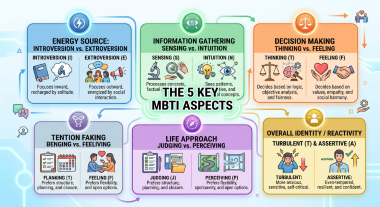
MBTI 5 Aspects

Five Key Aspects

Myers & Briggs Type Indicator

A deeper look at MBTI through functional or aspect-based patterns that expand on the basic type model. Here are the five aspects explained in the article:

  1. Energy — inroversion (I) vs. extraversion (E)→ determines how individuals gain and expend energy
  2. Mind — observant (S) vs. intuitive (N)→ reflects how people perceive and process information
  3. Nature — thinking (T) vs. feeling (F)→ influences decision-making and emotional processing
  4. Tactics — judging (J) vs. prospecting/perceiving (P)→ describe how individuals approach life and structure their environment
  5. Identity — assertive (A) vs. turbulent (T)→ underpins the other four aspects, reflecting self-confidence and response to stress.
The Big Five

O.C.E.A.N.

The Big Five

A personality framework based on five traits — Openness, Conscientiousness, Extraversion, Agreeableness, and Neuroticism — used to describe personality on a spectrum rather than in fixed categories

Jungian's Archetypes

Carl Jung's

12 Archetypes

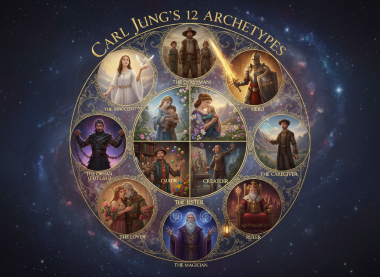
Carl Jung believed the mind has both a conscious and an unconscious dimension. The conscious mind holds the thoughts, choices, and experiences we are aware of, while the unconscious reaches deeper—first into the personal unconscious, which contains forgotten memories and repressed material, and then into the collective unconscious, a shared psychological layer shaped by universal human patterns called archetypes.
In Jungian thought, archetypes are recurring symbolic roles that appear across myths, dreams, stories, and everyday life. A modern twelve-archetype framework often used to organize these patterns includes the Caregiver, Ruler, Creator, Innocent, Sage, Explorer, Outlaw, Magician, Hero, Lover, Jester, and Everyman.

16 Personalities

16 Personality Types

Myers & Briggs Type Indicator (MBTI)

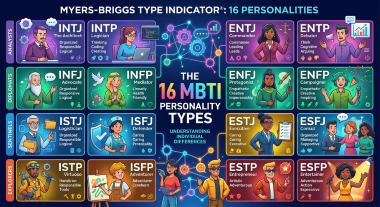
These are the four Role Groups and their 16 individual personality types from the 16Personalities framework — a modern, expanded derivative of MBTI:

  1. Analysts → Architect, Commander, Debater, Logician
  2. Diplomats → Advocate, Campaigner, Mediator, Protagonist
  3. Sentinels → Consul, Defender, Executive, Logistician
  4. Explorers → Adventurer, Entertainer, Entrepreneur, Virtuoso
Attachment Styles

Attachment Styles

How unresolved trauma creates invisible patterns

There's a quiet truth we often overlook — so much of our energy goes into trying to shape others into who we wish they'd become. But beneath every action lies a story — a tapestry stitched from childhood memories, unhealed wounds, deep fears, and lived experience.

Communication Styles

Communication Styles

A Look at the Different Ways We Communicate

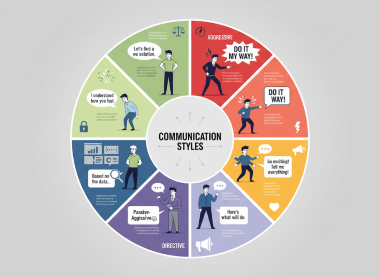
A broad communication framework covering assertiveness, reasoning, connection, structure, and modality to explain how people express themselves and relate to others

Sternberg's Theory of Love

Sternberg's Theory of Love

Intimacy, Passion, and Committment

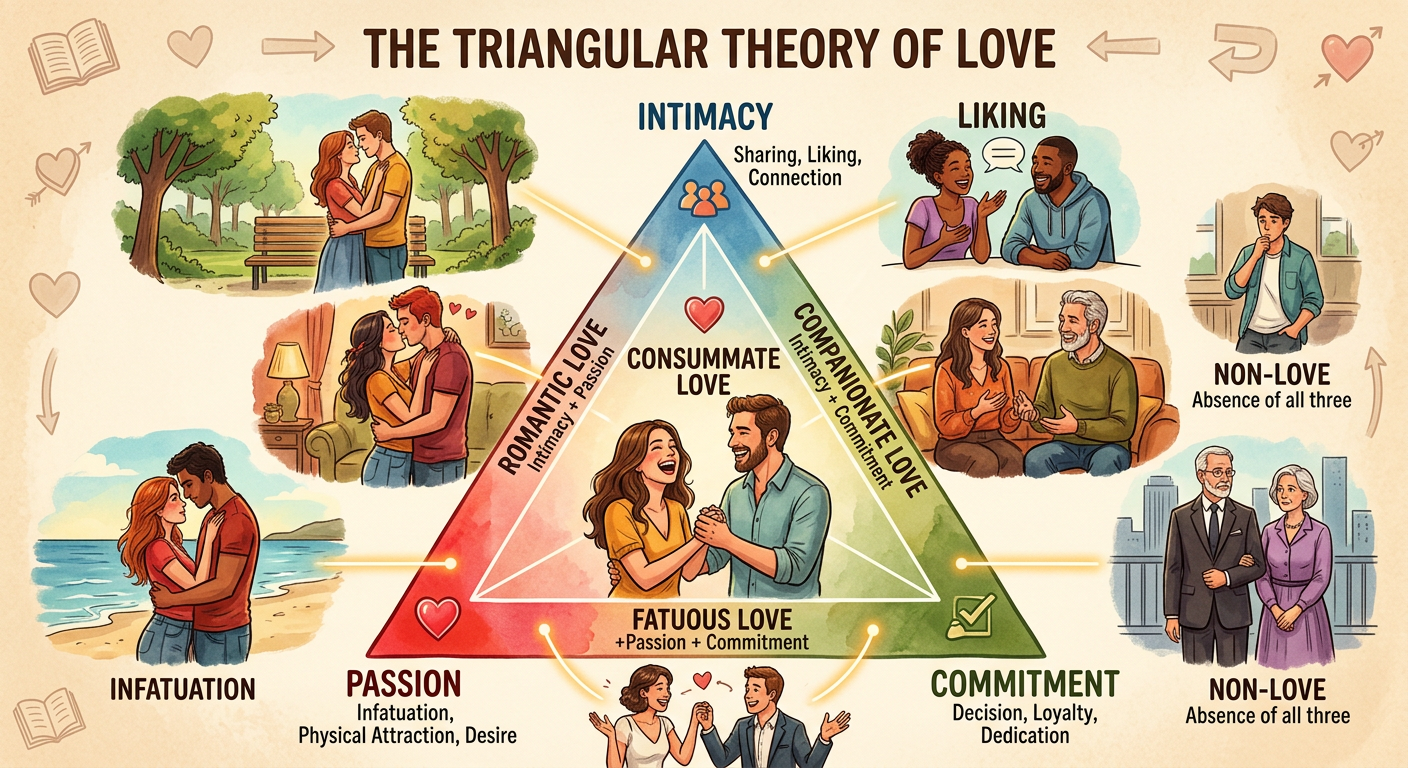
Sternberg's theory of love is a framework that was introduced in 1986 by Robert J. Sternberg. The theory explores how individuals interact within relationships and interpersonal dynamics. It explains love through three interrelated components:

  • Intimacy – Emotional closeness, trust, and bondedness
  • Passion – Romantic and physical attraction, motivational desire
  • Commitment – Cognitive dedication to maintaining the relationship (short-term decision to love or long-term commitment)
Gardner's Multiple Intelligences

Gardner's Multiple Intelligences

Eight Intelligences

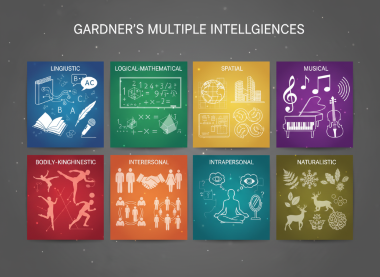
A framework that views intelligence as a "biopsychological potential to process information that can be activated in a cultural setting to solve problems." Gardner's theory focuses on eight distinct cognitive abilities that highlights different strengths:

  1. Logical-Mathematical (number/reasoning smart),
  2. Spatial (picture smart),
  3. Bodily-Kinesthetic (body smart),
  4. Linguistic (word smart),
  5. Intrapersonal(self-awareness),
  6. Interpersonal (people smart),
  7. Naturalist (nature), and
  8. Musical (music smart)

.

Erikson'Psychosocial Stages

Erikson's Psychosocial Stages

Infancy to Old Age

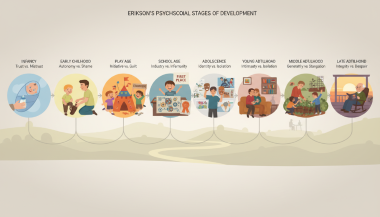
A lifespan development model with eight stages, each centered on a core conflict that shapes identity, relationships, and emotional growth and eight virtues to be gained after successfully navigating a stage. These virtues represent the psychosocial strengths--positive resolutions to crises:

  1. Hope (Trust),
  2. Will (Autonomy),
  3. Purpose (Initiative),
  4. Competence (Industry),
  5. Fidelity (Identity),
  6. Love (Intimacy),
  7. Care (Generativity), and
  8. Wisdom (Ego Integrity)